

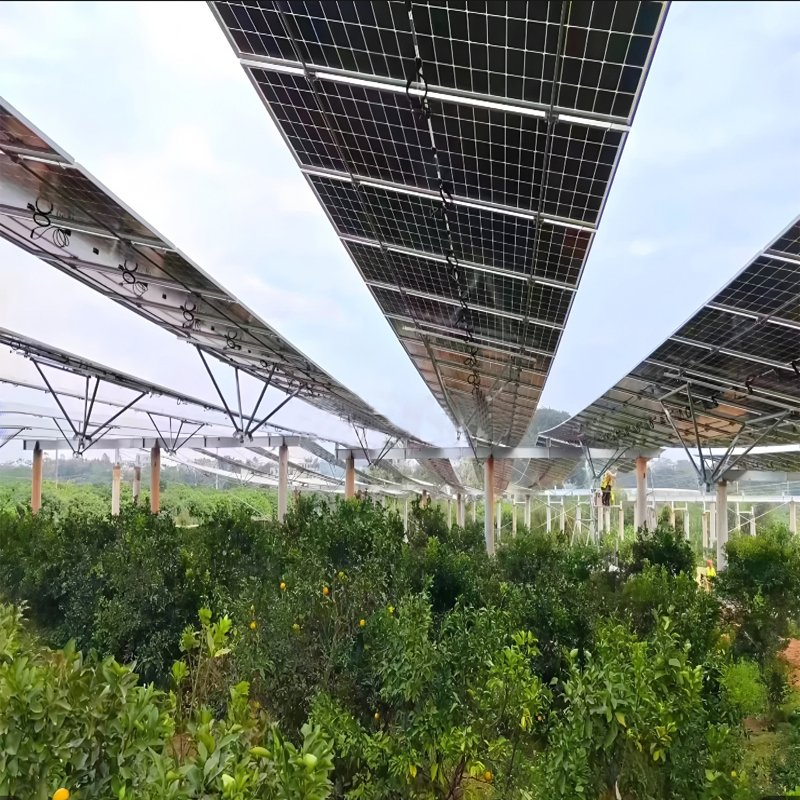
- Insufficient Terrain Adaptability: Traditional steel and aluminum structures are difficult to install on irregular terrains such as slopes, hills, and ponds.
- Limited Wind Resistance: Traditional designs pose safety hazards in typhoon-prone areas.
- High Material Consumption: Extensive use of steel leads to increased carbon emissions, which contradicts the environmental philosophy of renewable energy.
- Low Installation Efficiency: Traditional systems require substantial on-site labor, resulting in excessively high labor costs.
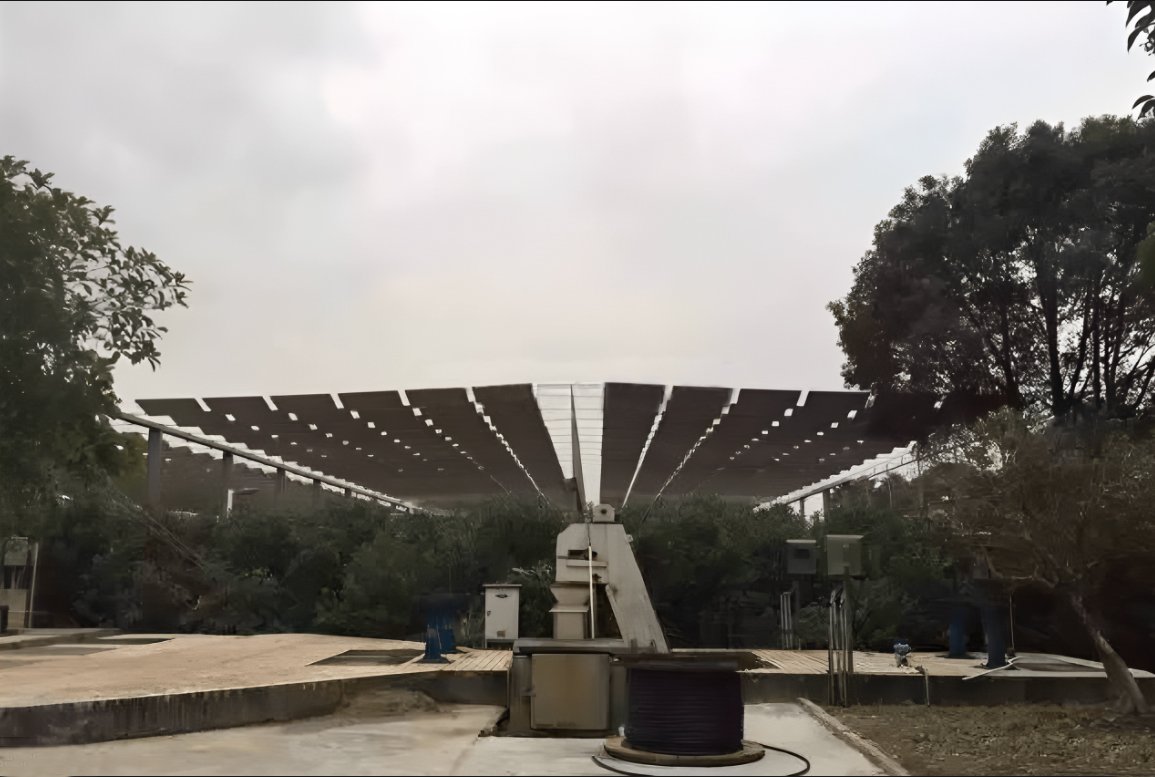
The Qierjie Solar Flexible Mounting System employs a design philosophy combining pre-stressed cable structures with lightweight composite materials. Through systematic technological innovation, it achieves comprehensive breakthroughs in performance, cost-effectiveness, and adaptability for photovoltaic mounting solutions. The system comprises a high-strength flexible cable net, adaptive connectors, intelligent tensioning devices, and a dedicated anchoring system, forming an integrated load-bearing framework.
Revolutionary Structural Design
The core innovation of Qierjie’s flexible mounting system lies in its unique spatial cable-net structure:.
Bidirectional Pre-stressing System: Longitudinal load-bearing cables and transverse stabilising cables form a spatial grid, distributing loads uniformly.
Life-Cycle Economic Analysis
Over a 25-year operational cycle, the Chiljer Flexible Mounting System delivers significant economic benefits:
- Initial Investment Savings: Land costs reduced by 20%–40%, foundation engineering savings of 30%–50%
- O&M Cost Advantage: Simplified cleaning and maintenance, reducing annual O&M expenses by 15%–25%
- Power Generation Gains: Optimized ventilation conditions, improving system efficiency by 3%–8%
- Residual Value Recovery: Dismantlable design with material recovery rates as high as 90%
Comprehensive calculations show that adopting the Chiljer Flexible Mounting System can reduce the Levelized Cost of Electricity (LCOE) by 0.08–0.12 RMB/kWh and increase the Internal Rate of Return (IRR) by 1.5–2.5 percentage points.
Installation Process and Quality Control
The installation of the Chiljer Solar Flexible Mounting System embodies the modern engineering philosophy of “lightweight, standardized, and intelligent.” By optimizing construction workflows and leveraging innovative technologies, the system shortens construction timelines by more than 50% compared to traditional mounting systems while ensuring exceptional engineering quality.
Standardized Installation Process
Pre-Construction Preparation Phase:
- 3D laser scanning of site topography
- Digital pre-assembly for design verification
- Factory prefabrication of materials (precision: ±2 mm)
- Case Study: A 200 MW project in Fujian saved 40 days of on-site time through prefabrication.
Foundation Construction Phase:
- Micro-pile foundations (diameter: 200–300 mm)
- Trenchless ground anchor systems
- Foundation corrosion protection compliant with environmental requirements
- Quality Control Point: Foundation positioning deviation ≤ 50 mm
Cable-Net Installation Phase:
- UAV-assisted cable laying and positioning
- Hydraulic tensioning with synchronized control
- Real-time stress monitoring and adjustment
- Key Parameter: Initial prestress deviation ≤ 5%
PV Panel Installation Phase:
- Robot-assisted precision positioning
- Quick-lock connection mechanism
- Automatic angle calibration system
- Productivity Rate: 80–100 modules installed per worker per day
Intelligent Construction Management System
Chiljer has developed a dedicated flexible mounting construction management platform that enables end-to-end digital oversight:
- Progress Visualization: 4D-BIM modeling displays real-time progress
- Resource Optimization: AI algorithms schedule labor, machinery, and materials
- Quality Traceability: Blockchain records key process data
- Safety Alerts: IoT devices monitor on-site risks
The system was deployed in a 150 MW project in Jiangxi, improving construction efficiency by 35% and reducing the quality defect rate to below 0.2%.