

Technical Features and Application Value of Solar-Powered Base Stations
Solar-powered base stations are green communication facilities that utilise solar power generation technology to provide energy for communication equipment. They offer advantages such as energy efficiency, environmental friendliness, and flexible deployment, playing a significant role in energy transition and optimising communication coverage.
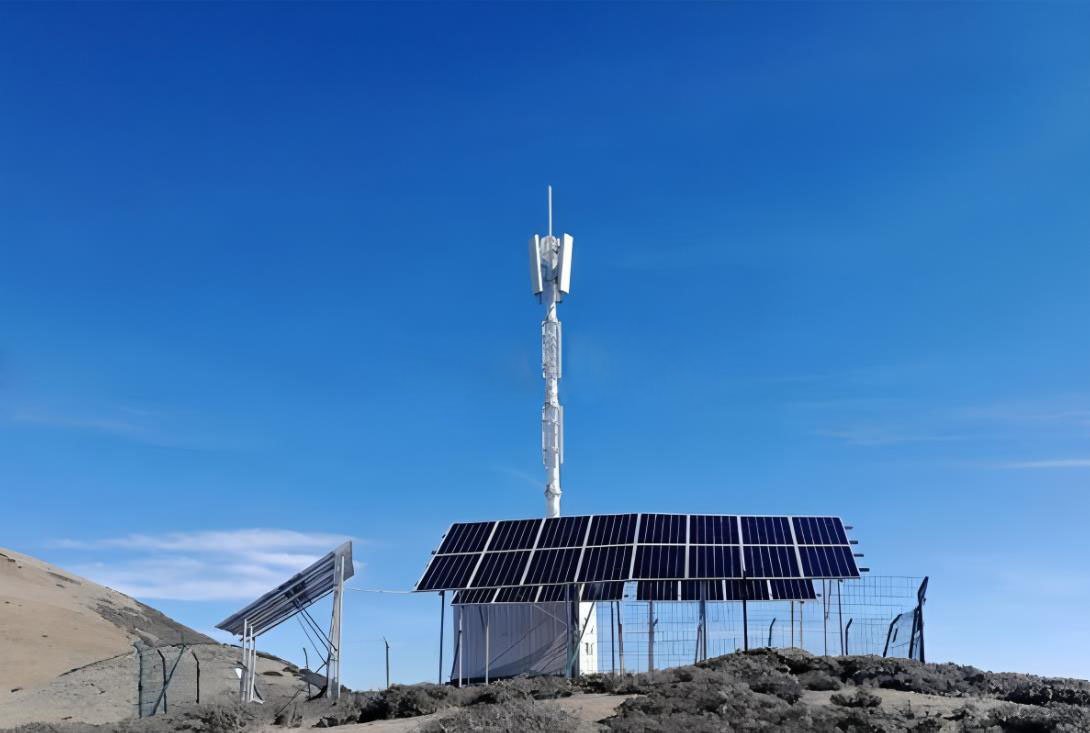
I. Core Technology and System Composition
Energy Supply Module: Centred on photovoltaic power generation, it is paired with energy storage devices (such as batteries) to ensure continuous power supply. Photovoltaic panels convert solar energy into electricity to meet the operational needs of base station infrastructure, while the energy storage system ensures stable power supply during nighttime or inclement weather.
Complementary Technology Solutions: Some base stations adopt a ‘solar-wind hybrid’ design, combining solar and wind power generation to further enhance energy supply reliability, particularly suitable for remote areas with complex natural conditions.
II. Key Advantages
Green and low-carbon: No reliance on traditional power grids, reducing fossil fuel consumption, significantly lowering carbon emissions, and aligning with global clean energy trends.
Flexible deployment: Suitable for mountainous areas, islands, and other regions with weak power grid coverage, reducing dependence on transmission lines, shortening construction cycles, and reducing infrastructure investment.
Cost optimisation: Through solar-powered self-sufficient electricity supply, long-term operations can save on electricity costs, while low-power devices and intelligent energy-saving algorithms further improve energy efficiency.
III. Typical Application Scenarios
Remote Area Communication Coverage: In rural and pastoral areas where the power grid is difficult to extend, solar-powered base stations can independently provide stable communication services, supporting the development of ‘digital villages.’
Emergency Communication Support: During natural disasters causing power grid outages, solar-powered base stations can serve as backup communication nodes to maintain emergency communication channels.
Smart Monitoring Collaboration: Some base stations integrate meteorological sensors to monitor environmental data such as temperature and humidity in real-time, supporting photovoltaic system maintenance and environmental management in surrounding areas.
IV. Development Trends
With improvements in photovoltaic technology efficiency and reductions in energy storage costs, solar-powered base stations are evolving toward higher stability and intelligence. In the future, they may integrate deeply with 5G micro-base stations and IoT devices, becoming comprehensive energy nodes combining ‘green communication + intelligent monitoring,’ driving the coordinated development of communication infrastructure and renewable energy.